

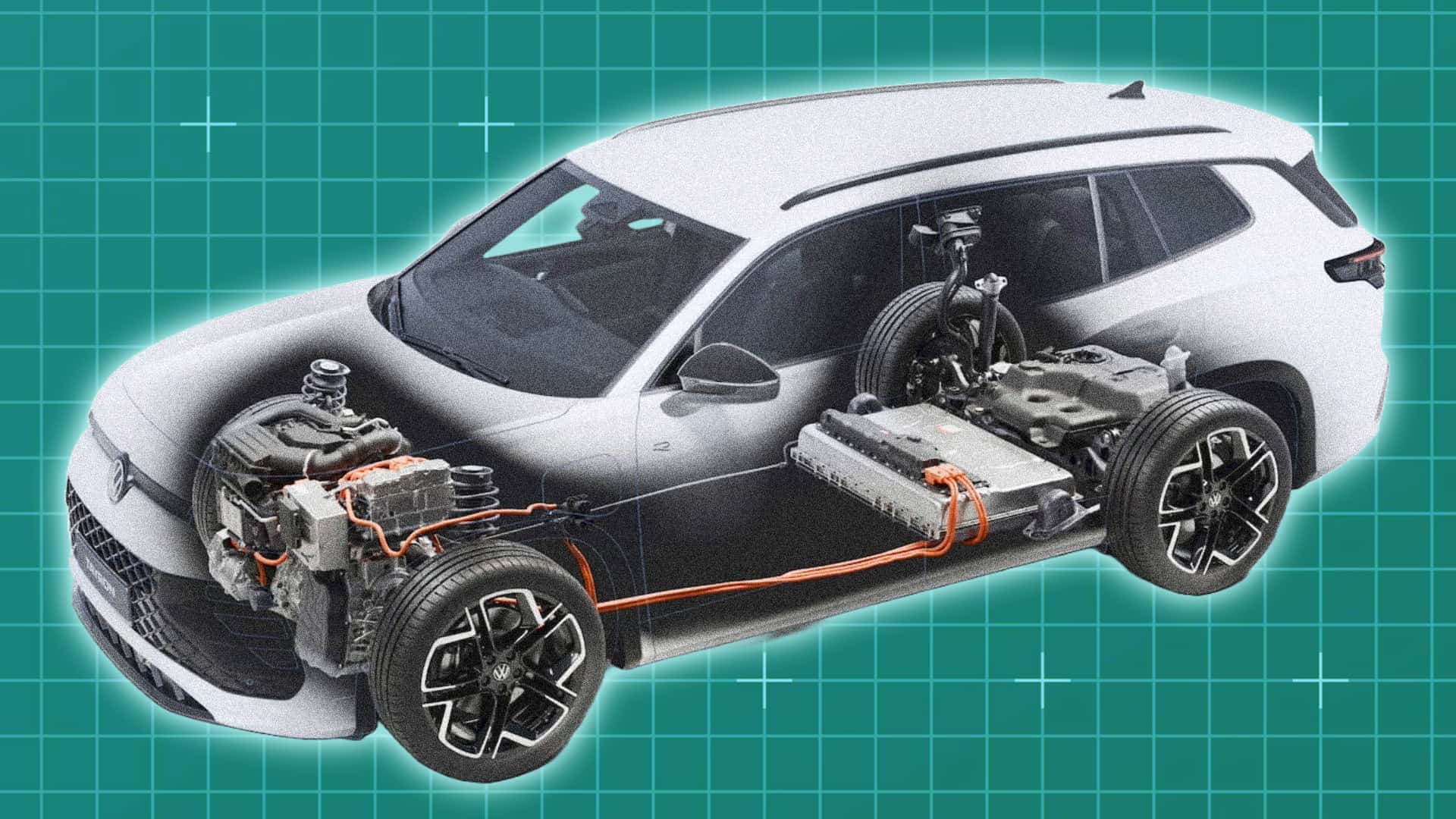
It’s significantly more challenging compared to building an efficient electric vehicle. Therefore, if you believe plug-in hybrid vehicles are the simple solution, reconsider.
Just make plug-in hybrids It's clear. Easy, even. It's the solution. By reading numerous forums, social media posts, and comments, you will likely come across this realization. The automotive industry appears convinced. From Ram to Chevy to Nissan, everyone is jumping on board with this trend.
The main big problem here is that developing a plug-in hybrid vehicle is extremely challenging. It’s actually more difficult than creating an excellent electric vehicle. Those under the impression that they can easily produce a top-notch PHEV should think again.
The problem is straightforward: the solution is complex. If your aim was to create a vehicle, you wouldn’t end up with anything less refined than a car needing not just a gas engine but also electric motors, a substantial battery for solo operation, a charging mechanism, a gearbox, along with all the intricate software and adjustments needed to seamlessly integrate these components into one functional unit.
It’s easy to understand why many end up having a texture similar to creamy peanut butter.
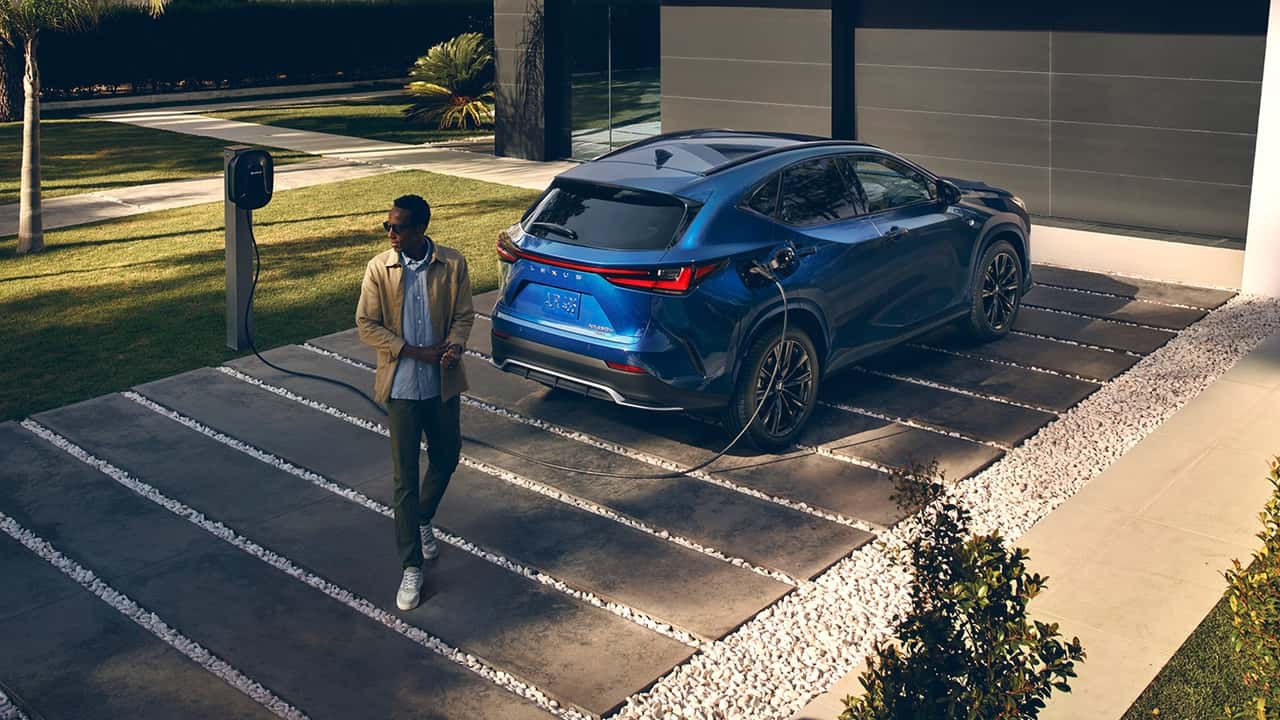
Lexus and Toyota have mastered the creation of smooth, dependable plug-in hybrid electric vehicles (PHEVs). However, not all companies have managed to achieve this success.
Just ask Consumer Reports The typical Plug-in Hybrid Electric Vehicle (PHEV) experienced 70% more issues compared to regular vehicles. standard gasoline vehicle in its most recent reliability survey That's a poorer performance compared to electric vehicles, which still have 42% more problems overall than gasoline-powered ones. However, this represents an impressive improvement. The previous year’s survey showed that plug-in hybrids had 146% more issues than both conventional gas and hybrid vehicles.
While the BMW X5, Kia Sportage, and Lexus NX PHEVs exhibit average reliability, their conventional counterparts are more dependable, Consumer Reports said. For more proof, check out the Mazda CX-90 that I'm behind the wheel of this week It's an elegantly crafted SUV from a brand known for consistent dependability. However, it was completely new for the 2024 model year.
According to the report, "The Mazda CX-90 PHEV stands out as the least dependable three-row SUV due to problems related to the hybrid battery, electrical components, and air conditioning systems. It's noteworthy that this vehicle features an exclusive engine design, along with both a PHEV system and rear-wheel-drive configuration, which were entirely developed for this model."
A contributing aspect to this problem is that new products often exhibit lower reliability compared to well-established designs, which is a common observation reflected in numerous electric vehicle concerns. However, the added intricacy of plug-in hybrid electric vehicles further amplifies this concern.
Now, Mazda has resolved numerous issues with the CX-90 through various updates and service advisories. And the one I’m operating seems much smoother compared to the initial reports. Nevertheless, this instance provides valuable insight.
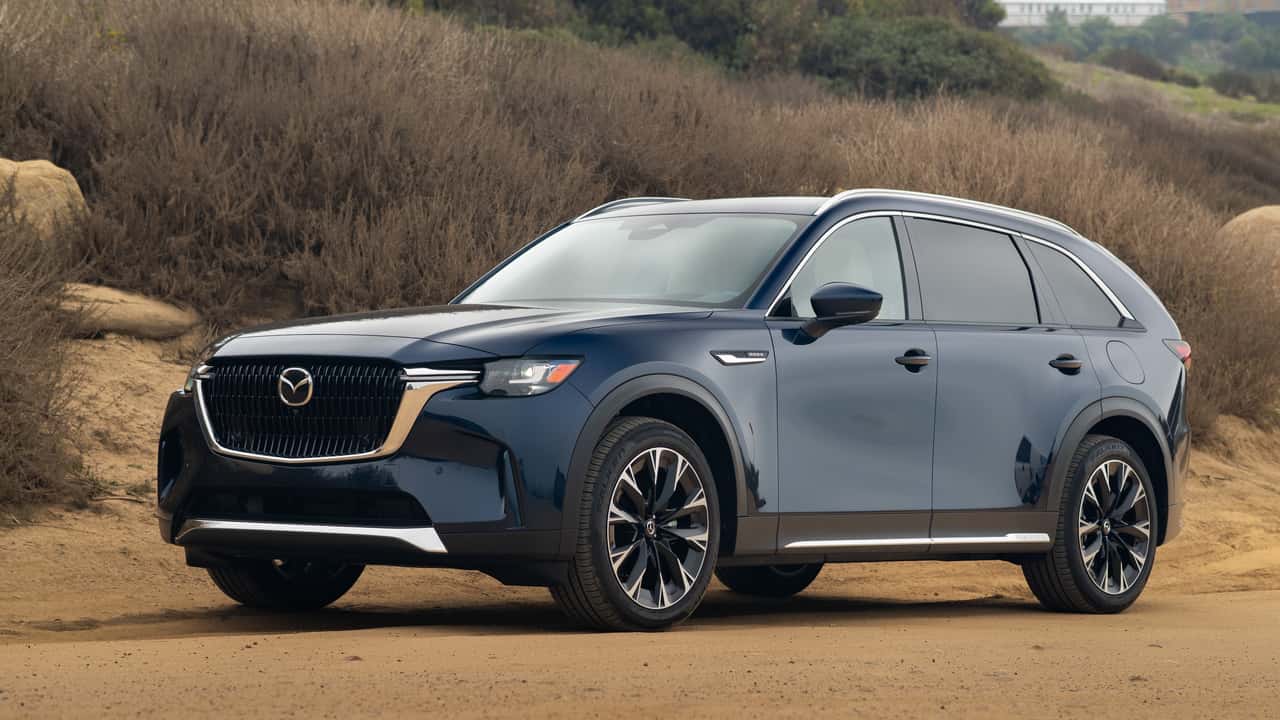
The Mazda CX-90 PHEV that I'm operating this week.
It's extremely challenging to nail down this technology on your initial attempt. extended-range electric vehicles (EREVs) , PHEVs lack sufficient electric power to completely decouple their engines from the wheels. Achieving this simplifies design because you don’t have to manage the integration of two distinct energy sources or handle the transition between them. EREVs face their own set of challenges, as Kevin Williams details in his comprehensive explanation about the Ram 1500 Ramcharger’s battery. )
PHEVs must integrate both their engines and brake systems similar to traditional hybrids. However, unlike standard hybrids, PHEVs require sufficient capability to operate using only electric power over considerable distances without engaging the internal combustion engine. Additionally, they necessitate built-in charging mechanisms to transform incoming alternating current from an external source into direct current suitable for powering the vehicle’s batteries.
This implies that you require all the intricate components of an electric vehicle along with all the complex parts of an internal combustion engine. Progress can only happen through adding more elements. Therefore, even though an EV might become easier to manufacture after overcoming initial challenges, plug-in hybrid electric vehicles (PHEVs) will consistently remain more difficult to construct and integrate compared to conventional gasoline-powered automobiles.
This clarifies that although hybrids have reached nearly equal pricing with conventional gasoline vehicles, plug-in hybrid electric vehicles (PHEVs) still command significantly higher costs. The CX-90 I am test-driving begins at approximately $12,000 above the price of the gasoline model. Out of this amount, only about $7,500 can be reduced through tax incentives, and this applies exclusively when leasing the vehicle.
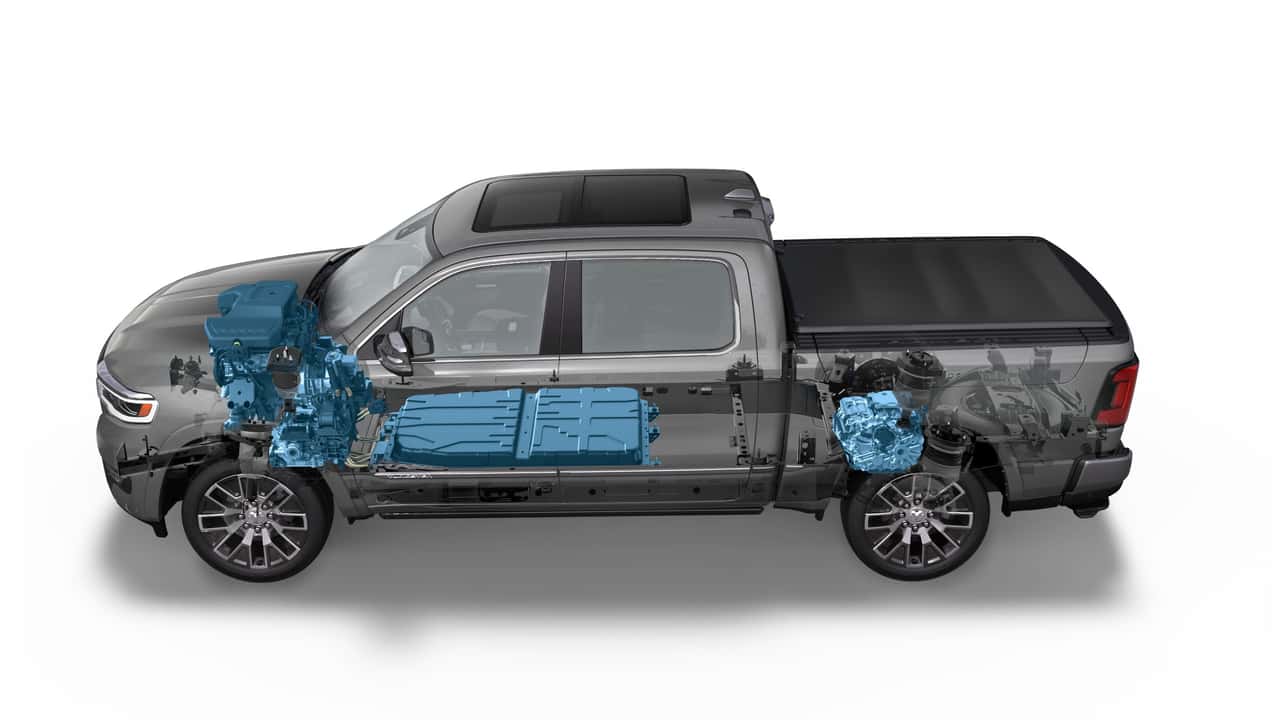
PHEV-equipped models such as the Ram 1500 Ramcharger provide the advantage of electric vehicle technology without requiring the gasoline engine to drive the wheels directly. This allows for reduced complexity in tuning and fewer intricate parts, including potentially simplifying the transmission.
This is not unusual. In July, the average price of a PHEV stood at just below $63,000. according to Business Insider . That exceeds the typical purchase price for a new car by more than $14,000 for that particular month. $48,401 per Kelley Blue Book That's anticipated. The surprising part might be that it was approximately $4,400 more than the typical selling price of a fully electric vehicle during the same period.
This stems from their complexity. Plug-in hybrid electric vehicles (PHEVs) are more difficult to manufacture and come with lower overall reliability, which increases costs for warranties as well. Additionally, they present a significant challenge when it comes to fine-tuning.
PHEVs need to manage the shift between the consistent, linear power delivery of their electric motors and the less predictable torque output of their internal combustion engines. This adjustment should happen almost instantly, regardless of speed, as drivers continually modulate the throttle input.
They have to swiftly cut off power to the internal combustion engine to conserve fuel and even more rapidly restart it once the torque request exceeds what the electric motors can provide. They need to maintain the engine within its optimal performance zone without allowing it to run monotonously at one speed, as this is unpopular with consumers. This presents quite a challenge.
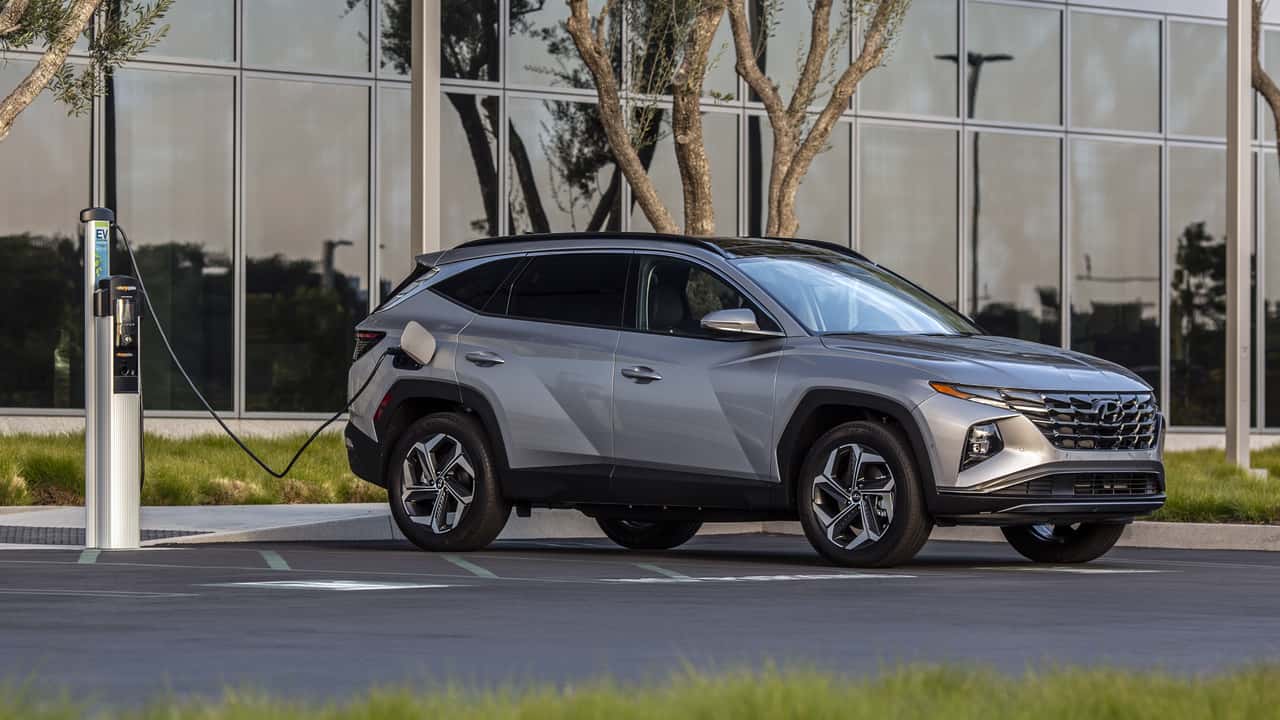
Last year, I had an experience driving a Hyundai Tucson PHEV which I really enjoyed.
A number of businesses have mastered this approach. I've tested plug-in hybrid models from Toyota as well as the Hyundai Motor Group, which encompasses Kia, and found them to be impressive. Chevy Volt It was delightful. TheBMW system particularly stood out during my drive of theX5 PHEV; others found it challenging at first before mastering it. Early versions ofVolvo’s plug-in technology felt rough and irritating, yet their recent advancements have improved significantly. Initially,Mazda’s CX-90andCX-70 faced difficulties with their systems, but they now operate much more smoothly.
Many more, though, have not bridged this gap. Stellantis produces numerous plug-in hybrid electric vehicles (PHEVs), yet some models run smoothly while others do not. A significant number suffer from reliability problems. Although General Motors excelled with the Volt, the second-generation vehicle was conceived a decade ago. GM recently announced last year that it was reinvesting in PHEVs. We'll find out if the expertise needed to create quality items endures through that period.
Audi has also achieved notable success, but Volkswagen's push toward PHEVs The effectiveness remains unverified. Subaru’s plug-in hybrid Crosstrek also failed, featuring an underwhelming electric power system that frequently needed assistance from the gasoline engine.
The upcoming hybrid variants of Subaru’s Forester and Crosstrek will be standard hybrids lacking a plug-in option. Although Ford’s Plug-In Hybrid Electric Vehicles (PHEVs) might offer superior performance, it's difficult to definitively state so. Despite the significant number of Escapes, Mavericks, and F-150s with hybrid technology sold by the company, which I’ve lost track of, their PHEV offerings haven’t fared well in the market.
The Escape Plug-in Hybrid performed reasonably well, whereas the C-MAX PHEV was primarily introduced as a compliance vehicle. Although the brand heavily promoted the plug-in hybrid variants of the Ford Explorer and Lincoln Aviator upon their release, these models were subsequently phased out without much fanfare. issues with their quality (which did not exclusively affect the hybrid versions) .
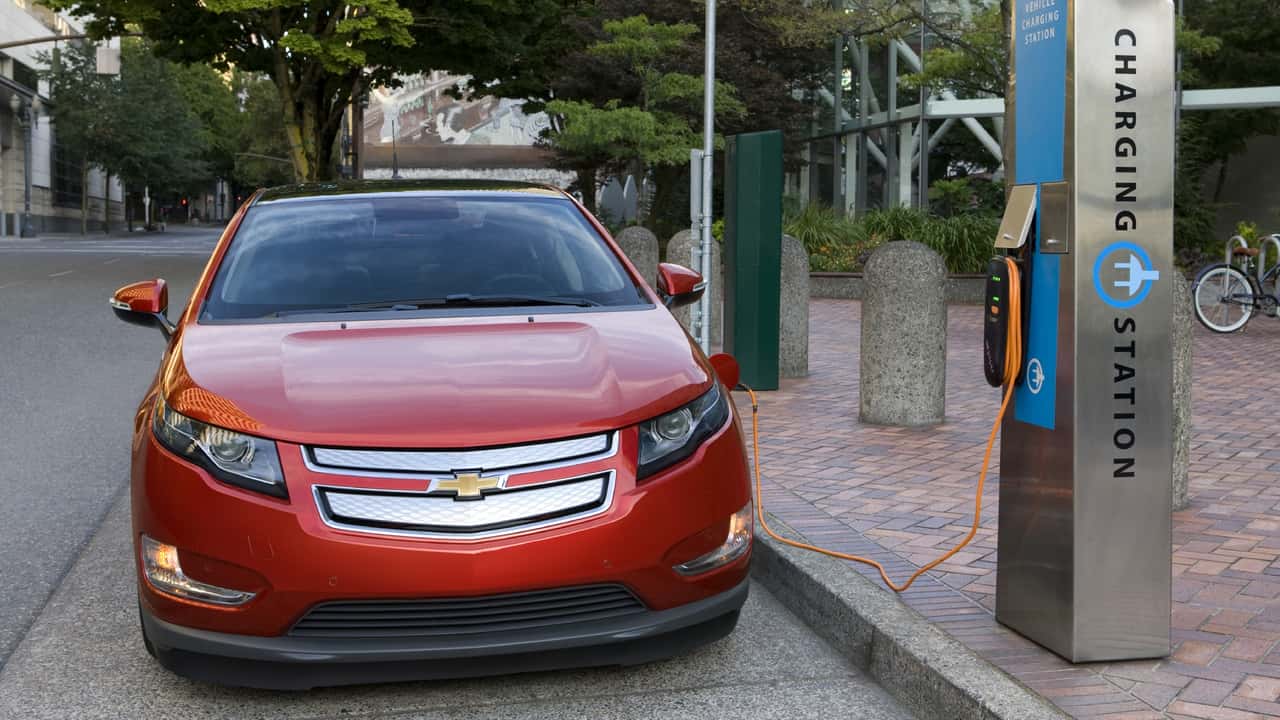
The Volt was the original plug-in hybrid. Too bad GM killed it before PHEVs caught on.
This does not imply that PHEVs are an inferior solution or destined for failure.
Given my limited Level 1 slow charging capability at home and the frequent nature of my road trips, a Plug-in Hybrid Electric Vehicle (PHEV) could be ideal for me.
Still, I observe numerous individuals treating them as the simple fix. Let me clarify this once and for all: they are indeed part of the answer, a crucial component we will require. However, if your aim is to create an exceptional PHEV, be prepared because it demands far greater effort compared to developing a top-notch EV.
Those who place large bets on them without waiting for the bugs to be ironed out will face a lengthy and agonizing journey ahead.
Contact the author: Mack.Hogan@insideevs.com .
Related Stories
- Mazda CX-90 Plug-In Hybrid: We’re Taking It for a Test Drive—What Would You Like to Learn About It?
- Will Hybrids Be the Next Big Thing in Electric Vehicles?
- What Is the Functioning Principle of an Extended-Range Electric Vehicle?
- Hyundai’s Extended-Range Electric Vehicles Might Feature Pickup Trucks, Santa Fe, and Genesis GV70
- Electric Vehicle Reliability Enhanced in 2024. Nonetheless, They Lag Behind Hybrids and Internal Combustion Engine Vehicles
- Are Electric Cars Reliable?