

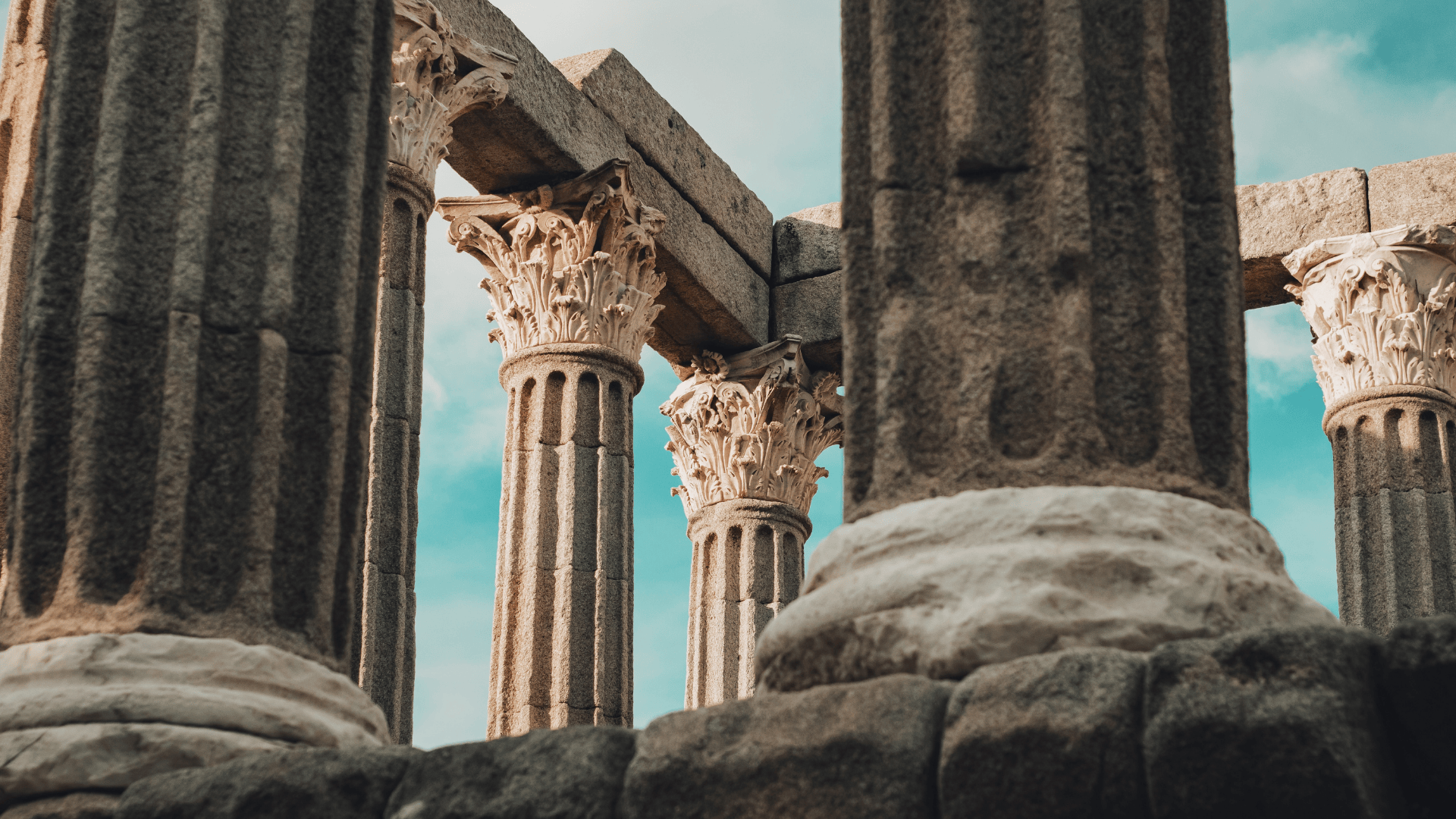
The Alentejo region boasts some of the most well-maintained Roman ruins in all of Portugal. For millennia, its architectural wonders and historical significance have captivated travelers from around the world.
Despite being Portugal's largest region , the Alentejo continues to attract relatively few tourists. Despite this, it boasts an impressively rich cultural and historical legacy, particularly evident in its capital city, Évora, which stands out prominently. UNESCO World Heritage Site .
This 14 th In this century-old walled city, each twist and turn along its cobblestone pathways unveils distinct architectural marvels. Notable among them is the Temple of Diana, constructed during the 1st century. st The century is among the most well-preserved ancient ruins in the nation. Featuring its granitic Corinthian columns, this site stands out. archaeological site leads you directly into the area's ancient Roman history.
Eager to explore Portugal? Take a look at this: some pieces to assist you with planning out your stay:
- This small Portuguese town was declared a "national marvel," and chances are you've likely never come across it.
- Lisbon: 7 must-see locations in Portugal's main city during your lifetime
- The loveliest natural parks to discover in Portugal
From a Roman structure to a local butcher’s store
Even though it bears her name, the Temple of Diana seems not to have been officially consecrated to the Roman huntress deity. This structure was erected during the opening decades of the first century. st In the century AD, when Évora was still under Roman control, historians concur that the structure was erected in honor of Emperor Augustus following his deification posthumously. The edifice experienced multiple alterations during the 2nd century. nd and 3 rd hundreds of years prior to being obliterated in the 5 th during the period of the Great Invasions.
As Christianity spread, the temple ceased to serve its initial purpose and went through various changes. During the Medieval period, it became integrated into a fortress structure and was included within the castle of Évora complex. Over many years, some of its pillars were used as part of the construction of the medieval edifice, inadvertently aiding in their own conservation. Starting from the 16th century, th From the century onward, it functioned as the town’s slaughterhouse up until 1836. The year 1871 marked a significant change when Italian architect Giuseppe Cinatti initiated a renovation effort with the objective of reverting the structure to its original ancient look.
A historical site evocative of past grandeur
The dimensions and design of Évora’s Temple of Diana bear some resemblance to those of Maison Carrée in Nîmes Even though it is partly in ruins, its massive rectangular platform, spanning 15 by 25 meters, conveys the significance of this structure. Similarly, the fact that 14 Corinthian columns remain intact after enduring for hundreds of years underscores its historical value.
The good news for visitors is that the temple can be accessed without any charges throughout the entire year since it stands in an open public area. Nonetheless, due to preservation concerns, entering the actual structure is not permitted.
An open-air village museum
Exploring this monument also allows you to discover Évora, one of the loveliest towns in the Alentejo . Relish the stunning setting: close at hand are the Duke of Cadaval’s palace and the Gothic cloister of the Convent of the Lóios. Additionally, the adjacent gardens and fortifications provide breathtaking vistas across the town.
The Sé Cathedral of Santa Catarina, which mixes elements of Romanesque and Gothic architecture, is an essential visit. Meanwhile, the Chapel of Bones, featuring walls decorated with human skulls, offers a striking visual experience. Lastly, those who appreciate art and food will enjoy exploring this destination further. Museum do Megalitismo Or savor the famous wines of Alentejo in local vineyards.
Roman Temple of Diana
Largo do Conde de Vila Flor
7000-804 Évora
+351 266 769 450